Blog
31 Minute
Kling 3.0 Native 4K Explained: Why This Is More Than Just Upscaling
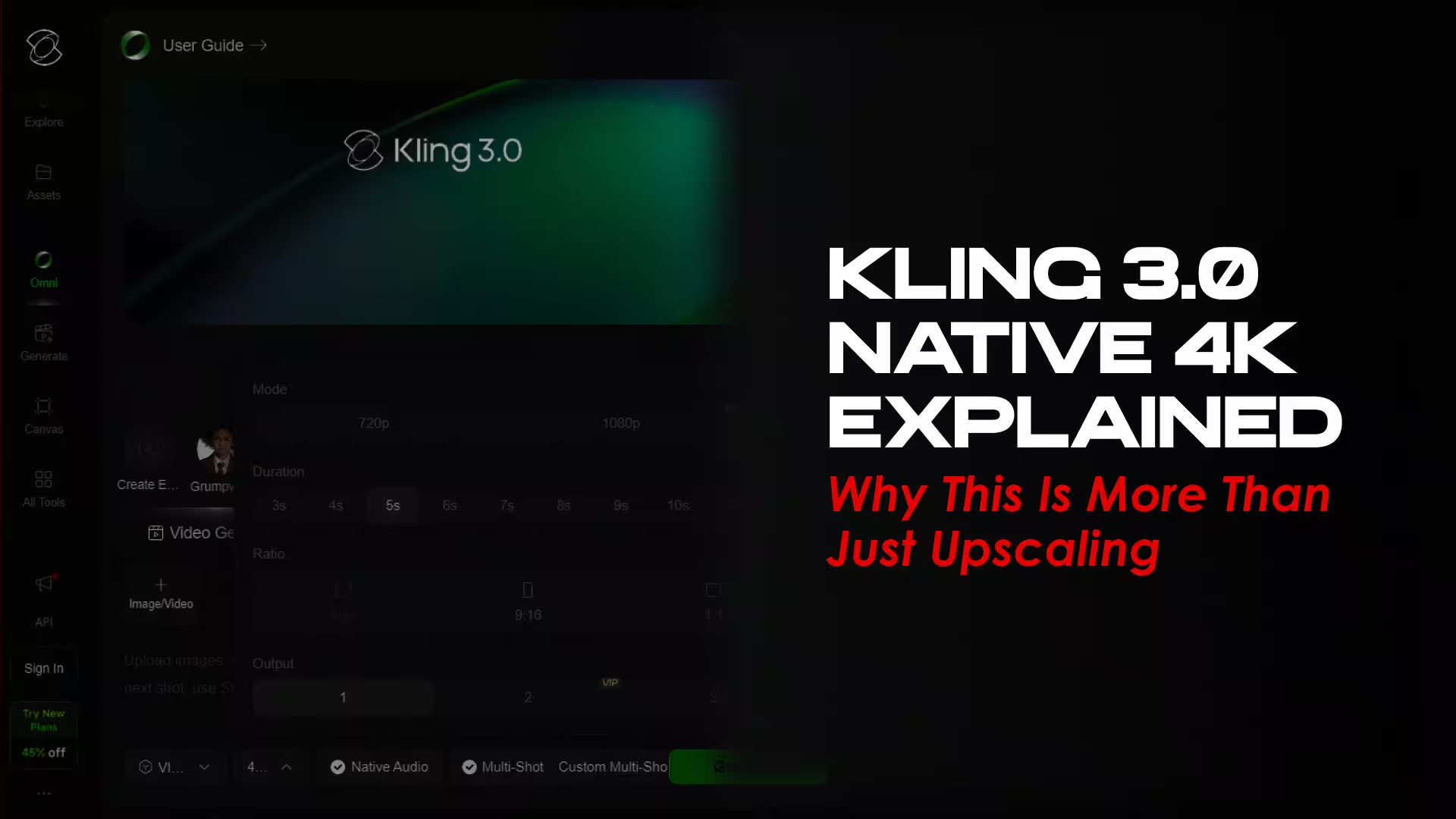
Summary: Kling 3.0 Native 4K changes the AI video workflow by generating videos in 4K from the start, reducing the need for upscaling, artifact repair, and extra post production fixes. It helps creators move from “generate first, fix later” to “generate better, finish faster.”
Native 4K changes more than resolution – it reshapes the rest of your Kling workflow. Once you’re generating clean 4K footage, the next priority is keeping characters and props consistent across shots, which is exactly what the Kling O1 Elements feature is built for. And when a frame still needs fixing, you can now remove unwanted objects inside Kling O1 instead of bouncing to another editor. Still deciding whether Kling fits your stack? See where it lands in our roundup of the best AI video generators.
AI video is entering a new phase.
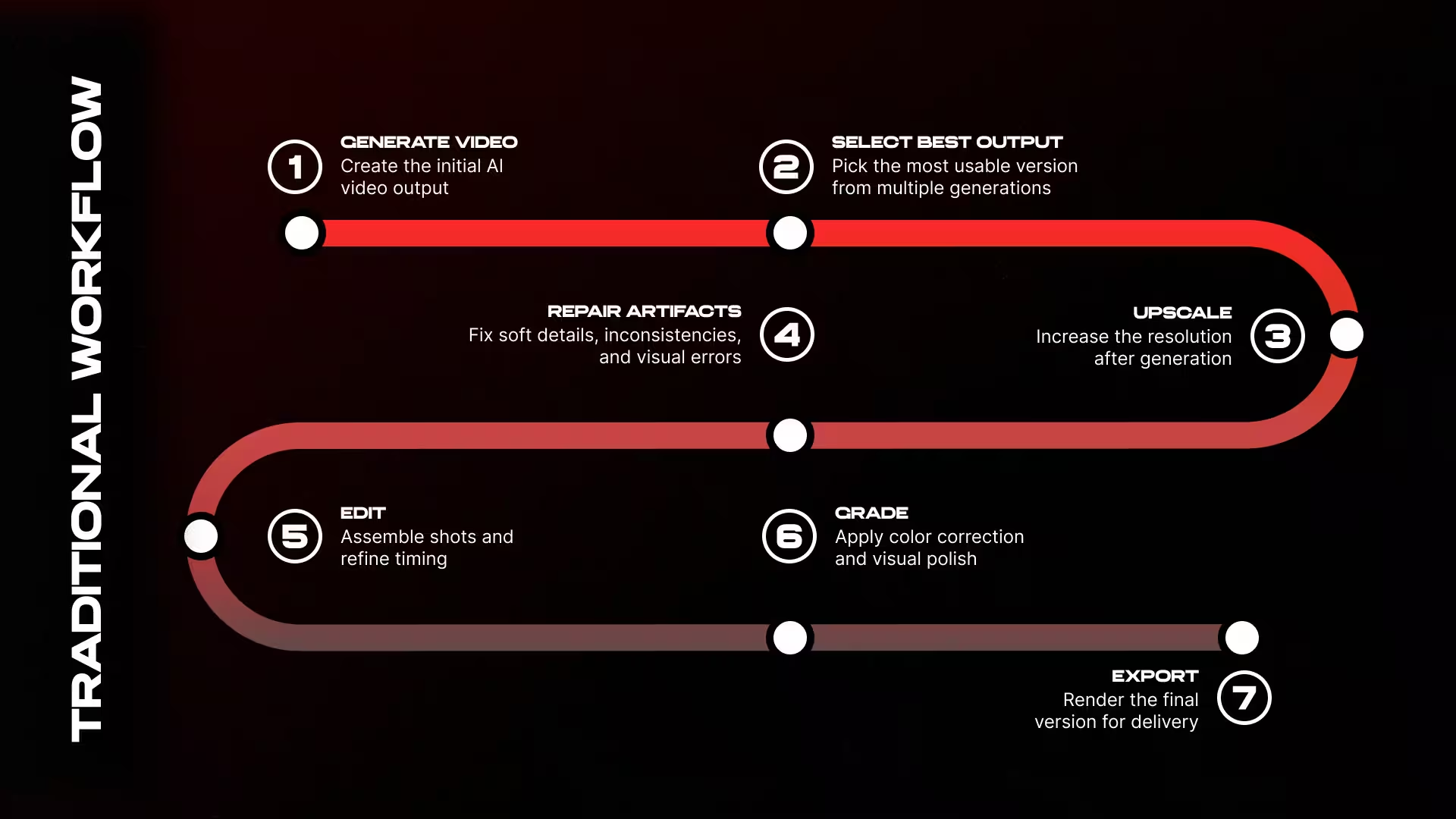
For the last few years, most AI video workflows followed a simple pattern. Generate the video first, then upscale it later. The model would create a lower resolution clip, and another tool would enhance it for better clarity.
That workflow helped creators produce better looking outputs, but it was still a workaround.
Kling 3.0 changes the conversation by introducing native 4K video generation. Instead of generating a lower resolution video and improving it later, the model can create video directly in 4K. Some current model listings describe Kling Native 4K as a generation model that outputs 4K video in one step, without requiring post production upscaling.
That difference is important.
This is not just about bigger resolution. It is about how the video is created from the beginning.
What Native 4K Video Generation Means
Native 4K video generation means the AI model creates the video at 4K resolution during the generation process itself.
In a normal upscaling workflow, the original video is created at a lower resolution. Then another system estimates extra pixels to make the video larger. That can improve sharpness, but it can also introduce softness, artifacts, texture errors, and unnatural details.
Native 4K works differently.
The model generates the frames at 4K resolution from the start. That means the visual information is built into the original output, not added later as a correction step.
For creators, this can lead to cleaner details, stronger textures, better frame quality, and more usable footage for professional editing.
Why This Is Different From Upscaling
Upscaling is useful. We still use it in many production workflows. But upscaling is not the same as native generation.
Upscaling improves an existing video.
Native 4K generation creates the video in 4K from the beginning.
That difference affects the final result.
When a video is upscaled, the system is trying to guess what extra detail should exist. It may sharpen the image, improve edges, and clean up softness, but it is still working from limited source information.
When a video is generated natively in 4K, the model has more room to build detail directly into the frame. This is especially useful for faces, fabric, product surfaces, architecture, landscapes, skin texture, cinematic lighting, and background depth.
For AI video production, this is a major shift.
Why Kling 3.0 Native 4K Matters
Kling 3.0 is not only adding more pixels. It is improving how AI video can move into real production.
Until now, many AI videos looked impressive on a phone screen but started to fall apart when used in larger formats. The footage could feel soft on monitors, weak in presentations, or less convincing when placed beside high quality camera footage.
The gap between looking good on a phone and holding up on a big screen is one of the sharper problems production houses run into when clients want more content without a bigger budget.
Native 4K helps reduce that gap.
It gives creators more detail at the source level. That means the video can hold up better during editing, cropping, color grading, reframing, and final export.
This matters for:
- Brand films
- Product videos
- Commercial campaigns
- Social media ads
- YouTube content
- Pitch decks
- Event screens
- Client presentations
- AI film production
For brands, this is especially important. A low-quality AI video can make the brand look careless, even if the idea is good. Better native output gives teams a stronger starting point.
Here is a simple visual reference to understand the difference between a generated 4K frame and a video that is only enhanced after generation.
Source: https://www.youtube.com/watch?v=I7tMTopo6xk
The Real Benefit Is Production Readiness
The biggest value of Kling 3.0 Native 4K is not just visual sharpness. It is production readiness.
When a shot comes out with better detail from the generation stage, the post production team gets more flexibility.
- Editors can crop without losing too much quality.
- Colorists can grade with cleaner image data.
- Creative teams can use the footage on larger screens.
- Brands can publish with more confidence.
- Studios can reduce dependence on multiple repair tools.
This does not remove the need for human direction. It simply gives the creative team a better base to work with.
AI still needs strong prompts, clear shot design, proper references, good camera direction, and careful selection. Native 4K improves the output, but it does not replace creative judgment.
Native 4K Does Not Mean Every Output Will Be Perfect
This is where we need to be realistic.
A 4K AI video can still fail.
If the prompt is weak, the output may still look generic. If the shot direction is unclear, the camera movement may feel random. If the character reference is poor, the identity may drift. If the scene has complex movement, the model may still make mistakes.
Resolution improves clarity. It does not automatically improve storytelling.
That is why native 4K should be seen as a stronger production tool, not a magic button.
A bad shot in 4K is still a bad shot.
The real advantage comes when native 4K generation is combined with strong creative direction.
How This Changes AI Video Workflows
The older workflow looked like this:
With native 4K generation, the workflow can become cleaner:
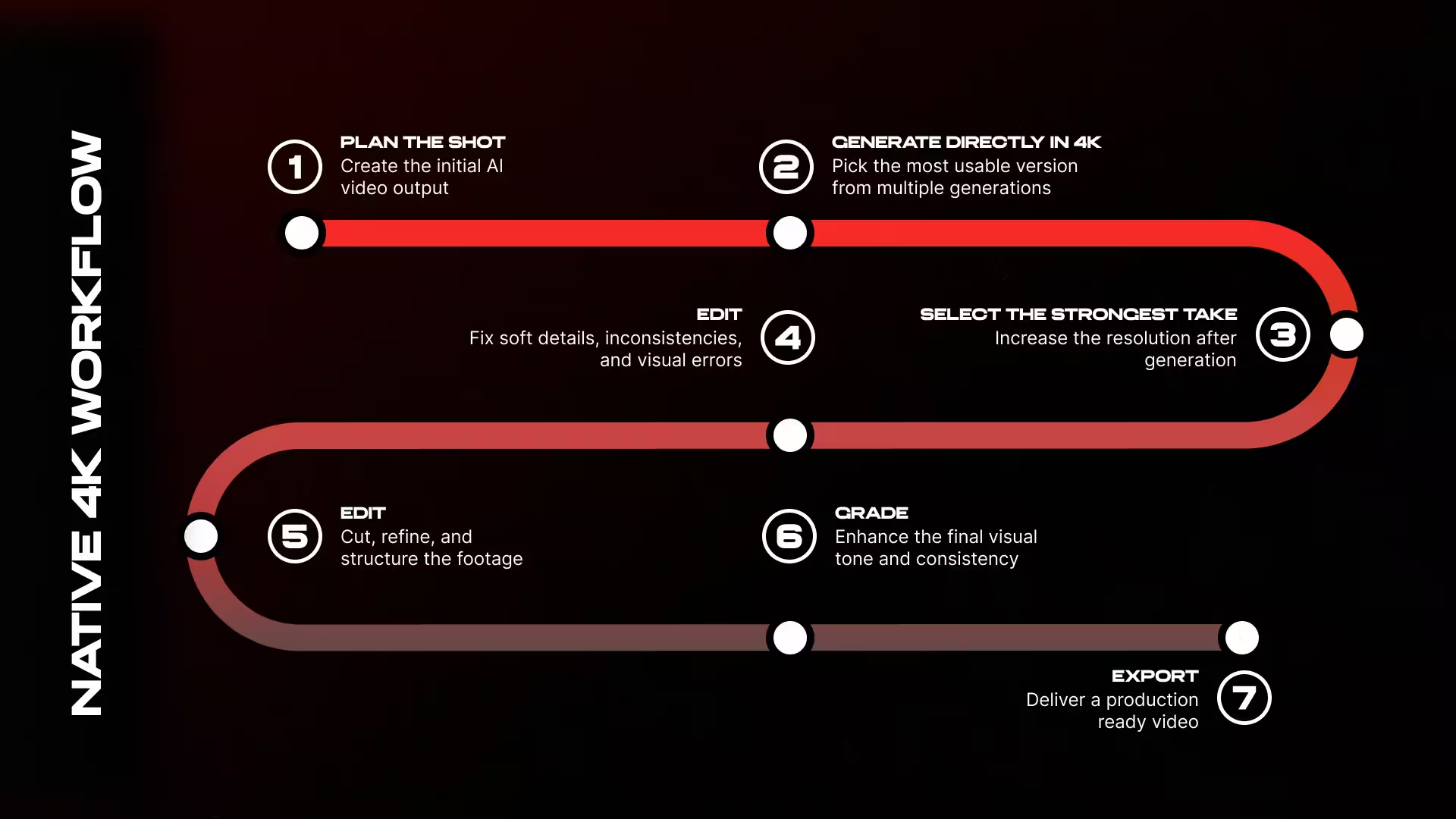
This can save time, especially when working on professional videos with multiple shots.
It may also reduce the need for repeated enhancement passes. That means fewer chances of over sharpening, fake texture, plastic skin, or unstable detail.
For studios and agencies, this can make AI video production more predictable.
What Creators Should Focus On
Native 4K gives better technical output, but the creative process still matters more.
To get better results from Kling 3.0, creators should focus on:
- Clear scene description
- Strong camera direction
- Specific lighting details
- Accurate subject movement
- Consistent character references
- Realistic environment details
- Controlled motion
- Simple but precise prompts
The model can generate at higher quality, but it still needs direction.
For example, instead of writing “a cinematic man walking,” write the shot like a filmmaker:
A slow low angle tracking shot of a man walking through a marble museum corridor, soft light falling from the upper left, background statues slightly out of focus, realistic fabric movement, calm serious expression, smooth natural motion, no sudden camera shake.
That type of direction gives the model more useful information.
Why This Matters for Brands
Brands should pay attention to Kling 3.0 Native 4K because AI video is no longer just a quick content experiment.
It is becoming part of real production.
But quality still decides whether the output feels premium or cheap.
A brand can use AI video for speed, but it should not sacrifice trust. Poor visuals can weaken brand perception. Soft footage, distorted motion, and low resolution outputs can make a campaign look unfinished.
Native 4K generation helps brands create AI videos that feel more polished from the beginning.
This is valuable for companies that want faster production without making the final video look low effort.
Our Take
As a leading AI Video Production Company, we see this as a meaningful step for video production.
The industry has spent a lot of time treating upscaling as the final rescue step. Generate first, fix later. Kling 3.0 Native 4K moves the workflow closer to generate better from the start.
That does not mean upscaling will disappear. It will still be useful in many cases. But native 4K generation gives creators a stronger first output, and that changes how we think about AI video quality.
The future of AI video will not be decided by resolution alone.
It will be decided by the combination of better models, better direction, better workflows, and better taste.
Final Thoughts
Kling 3.0 Native 4K is a strong signal of where AI video is heading.
The next stage is not just about creating videos faster. It is about creating videos that are good enough to enter real production workflows.
Native 4K generation gives creators, brands, and studios a better starting point. It reduces dependence on post upscaling and helps AI generated footage hold more detail from the beginning.
But the core truth remains the same.
AI can generate the video.
Humans still shape the story, the taste, and the final quality.