Blog
31 Minute
YouTube AI Video Labels: What the New Automatic System Means for Creators and Brands
YouTube has changed how it handles AI content, and the shift matters to anyone who publishes video for a living. The platform will now apply Youtube ai video labels on its own, using internal detection signals, instead of leaving the decision entirely to the person uploading the video. The company shared the update in late May 2026, and it lands at a moment when generative video tools have become good enough that a viewer often cannot tell what was filmed and what was generated.
Below is a clear, practical breakdown of what actually changed, how the detection works, where the labels show up, and what it means if you create video or commission it for a brand. We make AI assisted films for clients every day, so this is written from the chair of someone who has to live with these rules, not just report on them.
What changed with YouTube AI video labels
For more than two years YouTube has asked creators to disclose when a video contains realistic AI content that could be mistaken for a real person, place, or event. That disclosure lived inside Creator Studio and depended on the creator being honest and remembering to tick the box.
The policy itself has not changed. What has changed is enforcement. YouTube now uses its own internal signals to spot when significant photorealistic AI has been used, and it will apply the label for you when its systems detect it. If you disclose, nothing about your habit needs to change. If you forget, or choose not to, the platform may now label the video on your behalf. In short, automatic ai labels on youtube move the responsibility from a voluntary checkbox to a system that watches the content directly.
It is worth being precise about scope. The change targets photorealistic, AI altered, or fully AI generated footage. Clearly stylised or imaginative scenes, the often cited example being a cartoon unicorn dancing through a fantasy world, do not need the same treatment and only carry a note in the expanded description.
Why YouTube is doing this now
The timing is not random. The update followed Google’s launch of a powerful new multimodal video model that can turn text, images, and audio into convincing video that respects physics and real world context. We covered exactly what this model can and cannot do in our review of Google’s Gemini Omni video model. As these models produce footage that looks genuinely real, a disclosure system built on trust starts to leak. Automatic detection is YouTube’s attempt to close that gap before AI generated video labels on YouTube become impossible for viewers to rely on.
This sits alongside a wider push on the platform. YouTube has also expanded its likeness and deepfake detection so that adults can scan for unauthorised face matches, after earlier tests focused on public figures, politicians, and well known creators.
How YouTube detects AI generated videos
There are two main routes that trigger a label.
The first is YouTube’s own detection. Starting in May 2026 the platform began using new internal signals to identify AI content and label it accordingly. This is the part that runs without any input from the creator.
The second is provenance metadata. Labels are attached permanently when a video carries C2PA Content Credentials showing it was fully AI generated. C2PA is an open standard for tagging the origin of media, and adoption is growing fast. OpenAI recently committed to it, joining names such as Nvidia, Kakao, and Eleven Labs. Several leading video models already embed this metadata and an invisible watermark (SynthID) by default, which means the label can follow the file even if nobody discloses anything. We have seen this firsthand across our hands on tests of the leading AI video generators, where provenance behavior varied widely between models.
There is one more wrinkle that production teams need to understand. If a video was made with YouTube’s own creation tools, such as Veo or Dream Screen, the creator cannot remove the label at all. Anyone who was wrongly flagged can update their disclosure status, but content from those native tools stays labelled.
Where the labels now appear
YouTube is also making the labels easier to see, which is arguably the bigger practical change for how your work is perceived.
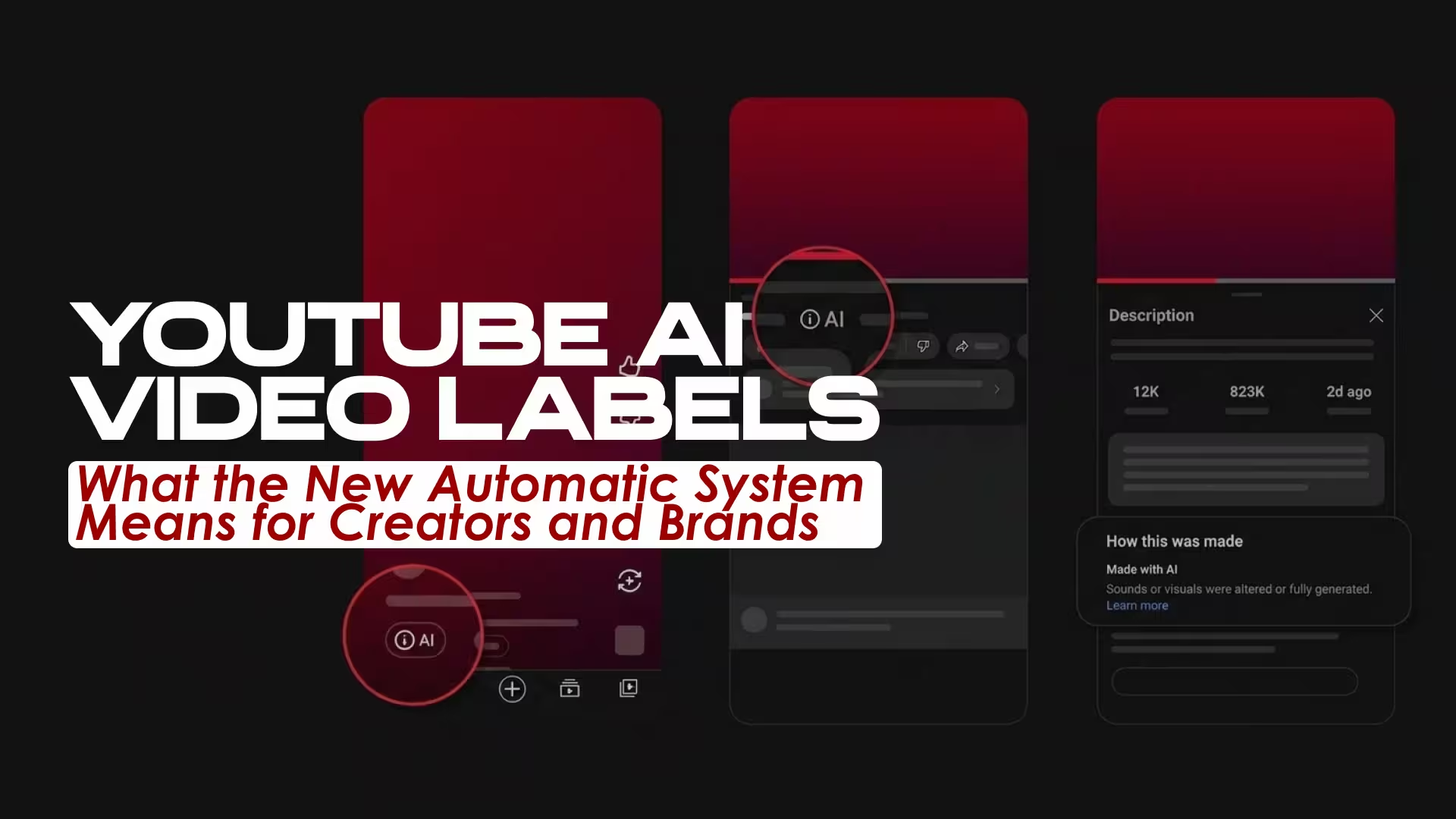
Before this update, the label usually sat quietly inside the expanded description. It only jumped onto the video itself for sensitive subjects such as health or news. Now the label appears directly below the video player and above the description for standard length videos, and it is laid over the frame on YouTube Shorts. The goal is simple. Make it obvious when someone is watching photorealistic content that was generated or altered by AI.
Lightly altered or plainly unrealistic AI content keeps the softer treatment, with the note tucked into the expanded description only.
Do YouTube AI labels hurt reach or revenue
This is the question every creator and brand manager asks first, and the answer is reassuring. YouTube has stated that the labels do not affect how a video is recommended, and they do not affect a video’s ability to earn money. The label is a transparency signal, not a penalty. So the worry is really about perception and brand tone, not about your views or your payout.
What this means for brands and AI video production companies
This is where the change gets interesting for studios. As an AI video production company, our view is that automatic labelling is not a threat to good work. It is a clarifying force.
When every piece of AI touched footage carries a visible tag, the old game of hiding the AI stops working. The value of a studio moves away from being able to operate the tools and toward taste, direction, brand strategy, and quality control. We have always argued that the model is not the product. A capable model in untrained hands produces noise. The same model guided by a director, a brief, and a sense of craft produces something a brand can actually use. Universal youtube ai content labels only sharpen that distinction.
There are concrete decisions to make, though, and they belong in the planning stage rather than the edit.
Tool choice now has a permanent consequence. Because C2PA metadata and native YouTube tools produce labels that cannot be removed, the generator you reach for affects the final deliverable in a way the client will see. This is why we keep evaluating each new release on its merits, as we did with Kling 3.0 and its native 4K output. That is a creative and contractual decision, not a technical footnote.
Client expectations need managing up front. A brand commissioning a polished spot may not expect an AI tag sitting under its video. The honest move is to brief clients early, explain that this is now the platform default, and reassure them that it does not reduce reach or monetisation. The conversation about disclosure should happen before the first frame is generated. Where a campaign calls for it, leaning into a stylised look rather than full photorealism keeps the lighter description level label instead of the prominent one.
Transparency is a trust asset, not a burden. Audiences are growing sceptical of synthetic media. A studio that discloses clearly, and builds provenance into its pipeline rather than fighting it, looks like the responsible partner. That reputation is worth more over time than a hidden label ever was.
Frequently asked questions
What are YouTube AI video labels?
They are notices YouTube places on videos that contain realistic AI generated or AI altered content. They tell viewers that what they are watching may not be a genuine recording of a real person, place, or event.
How does YouTube label AI videos automatically?
YouTube uses internal detection signals to spot significant photorealistic AI, and it reads C2PA provenance metadata embedded by many AI models. When either is present, the platform can apply the label without the creator disclosing it.
Can creators remove YouTube AI labels?
A creator who was misidentified can update the disclosure status. However, labels cannot be removed when the content was made with YouTube’s own tools such as Veo or Dream Screen, or when the file carries C2PA data showing it was fully AI generated.
Do YouTube AI labels affect monetisation or recommendations?
No. YouTube has confirmed that the labels do not change how a video is recommended and do not affect its ability to earn revenue.
What should brands using AI video do about the labels?
Plan tool choice with the permanent label in mind, brief clients early so the tag is no surprise, and treat clear disclosure as a trust signal rather than a problem to hide.
The bottom line
The move to automatic youtube ai video labels marks a shift from voluntary disclosure to platform level detection. For casual viewers it means more honesty about what is real. For creators it means the label is largely out of your hands now, though it costs you nothing in reach or revenue. For studios and brands it raises the bar in the best way, rewarding craft, direction, and transparency over the ability to quietly hide that a model was involved.
If you produce AI assisted video, the practical takeaway is simple. Build provenance and disclosure into your process now, choose your tools knowing the label may be permanent, and let the quality of the direction be the thing that sets the work apart.